Category
Web Design
Publish Date
5 Jun 2026
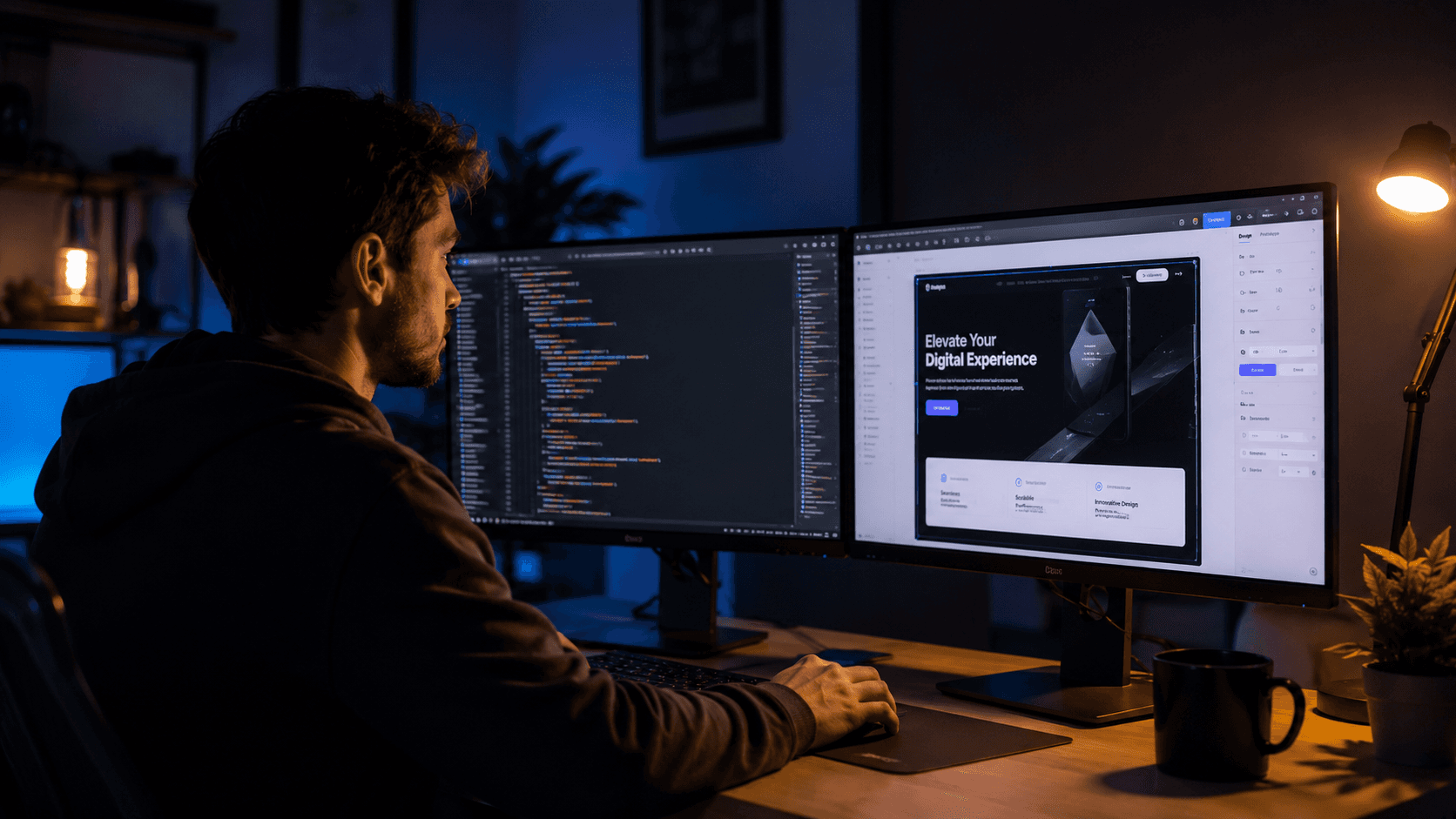
Everyone has an opinion about AI right now. Most of those opinions are either "it's going to replace us all" or "it's completely overhyped garbage." I've been on both ends of that spectrum over the past year, and honestly, neither is true.
I'm 17, I run a small design studio, and I build websites for real clients. AI is part of my workflow now — not because I followed some productivity guru's advice, but because I tried it, broke things, and figured out where it actually helps. This is that story.
The Hype Made Me Skeptical at First
When AI tools started flooding every design and dev community, the noise was exhausting. Every week there was a new tool that was supposed to "replace developers" or "build full websites in seconds." I tried a few. The results were mostly mediocre — the kind of output that looks functional at a glance but falls apart the moment you actually need something specific.
That early experience made me dismissive for a while. I kept building things the way I always had, convinced that AI was just a shortcut for people who didn't want to learn properly. That was probably the wrong conclusion, but I needed to arrive at the right one on my own terms.
Where I Actually Use It Now
The shift happened when I stopped treating AI like a replacement and started treating it like a very fast collaborator who needs clear direction.
ChatGPT and Claude are where I spend the most time. Not for writing code from scratch, but for thinking through problems. If I'm stuck on how to structure a component, or I need to understand why something in CSS isn't behaving the way I expect, having a conversation about it is genuinely faster than reading three Stack Overflow threads. The key is knowing how to ask — vague questions get vague answers.
Cursor changed how I write code. It's not magic, but having autocomplete that actually understands context means I spend less time on the mechanical parts of coding and more time on the decisions that matter. It still writes things wrong sometimes. I still have to think. But the pace is different.
Midjourney I use mostly for creative exploration — generating reference images, moodboards, cover visuals. It's not replacing any real design work, but it cuts down the time I'd spend hunting for the right reference on Pinterest. I treat it like a very fast sketch tool.
What AI Still Can't Do
Here's the honest part: AI has no taste. It has no relationship with the client. It doesn't know that the founder of this particular company hates anything that looks too corporate, or that the color palette needs to reference something specific about their city.
Context is everything in design, and AI doesn't have access to any of it unless you give it everything — and even then, it's working with approximations. The strategic side of this work, the part where you're figuring out what a brand actually needs and why, that's still entirely human.
I've also noticed that AI-generated code tends to be technically functional but architecturally lazy. It solves the immediate problem without thinking about what happens when the project scales. That's fine for a quick prototype. It's a problem if you ship it.
The Real Risk Nobody Talks About
The thing I think about more than replacement is dependency. It's easy to start reaching for AI the moment something feels hard — and that's where I think juniors especially need to be careful. If you skip the uncomfortable part of actually figuring something out, you don't build the mental model that lets you catch AI mistakes later.
I've had moments where Cursor wrote something that looked completely right and was subtly broken. I only caught it because I understood what the code was supposed to do. If I'd just accepted the output, it would've shipped broken.
AI makes you faster. It doesn't make you better at thinking. Those are separate things.
How I Think About It Going Forward
I'm not worried about AI replacing web developers or designers — at least not in the way the headlines suggest. What I do think will happen is a split between people who use these tools well and people who use them as a crutch. The gap between those two groups will be obvious in the work.
For me, the goal is always to stay on the right side of that line. Use it for speed, use it for exploration, use it to handle the repetitive parts. But stay engaged. Stay curious. Don't outsource the thinking.
Key takeaway: AI is a real part of how I work, and I don't think that's going to change. But the more I use it, the more I realize it amplifies what's already there — if you understand your craft, it makes you faster; if you don't, it mostly just produces convincing-looking mistakes. That's a tool worth respecting, not fearing.