Category
Personal
Publish Date
28 May 2026
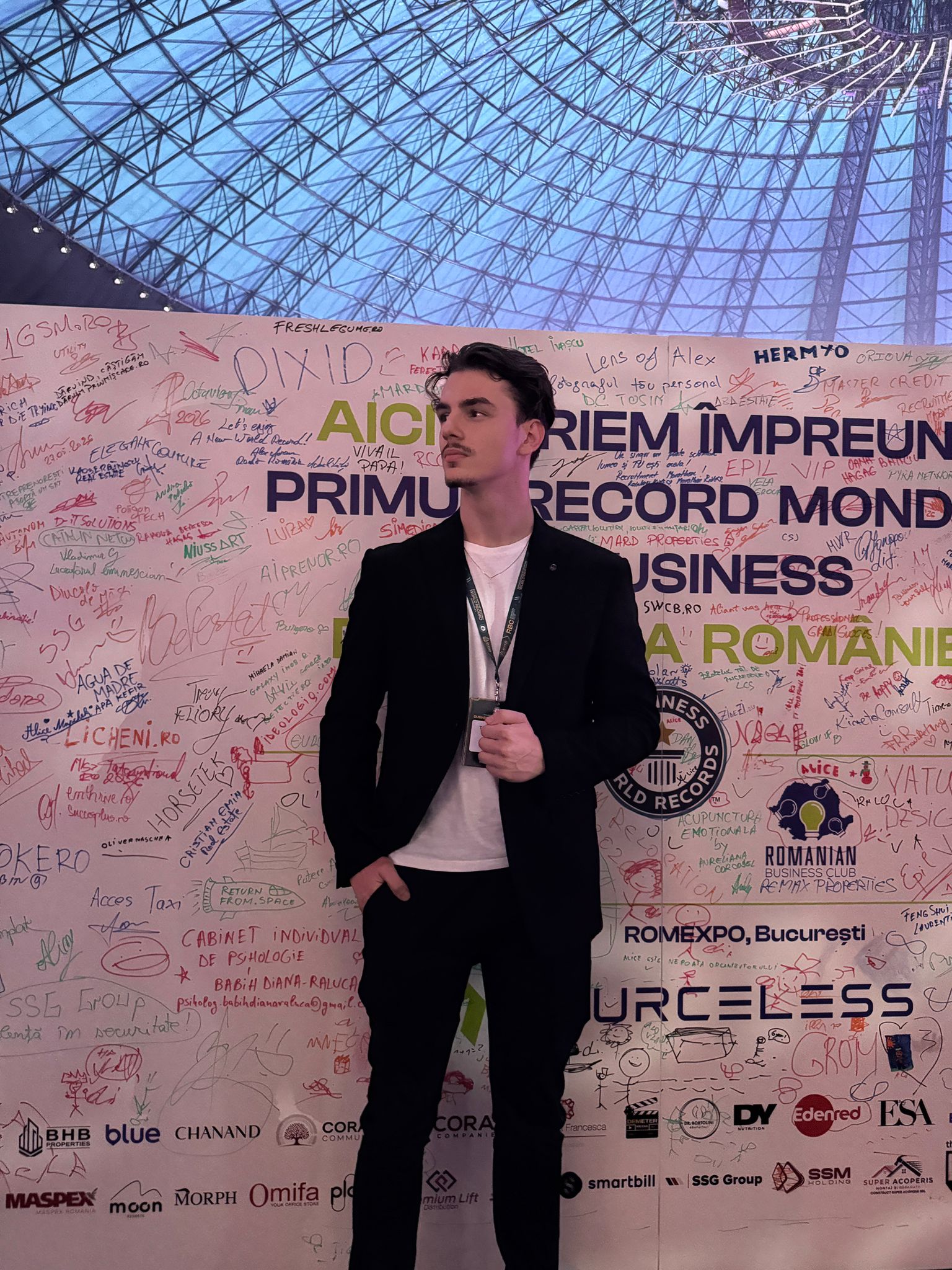
I did not expect to walk out of Romexpo feeling like something had shifted. I went in curious, slightly nervous, and not entirely sure what I was getting myself into. I walked out with a list of real connections, a few humbling realizations, and a much clearer picture of where I actually stand when it comes to meeting people.
This was the Romanian Business Club's attempt to break the Guinness World Record for the largest speed networking event ever organized. Over 1,500 entrepreneurs, investors, lawyers, agents, designers, and professionals from all kinds of industries — all in one room, all with three minutes to make something happen. I was probably one of the youngest people there.
The Room Had Its Own Energy
Before the rounds even started, I just walked around. No agenda, no pitch prepared. Just observing.
There is something about being surrounded by that many people who are all actively building something that hits differently than any online space ever could. LinkedIn shows you highlights. A room like that shows you reality — people mid-conversation, visibly nervous, visibly confident, visibly figuring it out just like the rest of us.
I even ended up giving a short interview somewhere in the middle of the floor. I did not plan that either.
Three Minutes Is Both Too Short and Exactly Enough
When the official rounds started, the format was simple. You sit, a timer runs, you talk, you move. Three minutes per person.
At first it felt rushed. But somewhere around the third or fourth round I realized the constraint was the point. You cannot hide behind small talk for long when the clock is already at one minute thirty. You either say something real or you waste both people's time.
I spoke with web designers who had been in the industry longer than I have been alive, with actors, physiotherapists, lawyers, and people who felt like potential future clients. Every round was a small experiment in how fast you can make a genuine impression.
I Found Out Where I Go Wrong
This is the part I did not expect to get from an event like this.
I always assumed I was decent at starting conversations. Turns out I default to talking about what I do before I ask anything about the other person. It is a small thing, but it changes the entire dynamic of a first interaction. People want to feel heard before they want to hear your pitch — even if you are not pitching anything.
I caught myself doing it in the first few rounds and tried to flip it. Lead with a question. Actually listen to the answer. It sounds obvious written out, but there is a difference between knowing something and being forced to practice it at speed with strangers.
Being the Youngest Person There Was an Advantage
I was uncomfortable at times. That is just honest.
Walking into a room where the average person has ten or twenty more years of professional experience than you do is a specific kind of pressure. But it also means expectations are low, which is one of the best positions you can be in. Nobody was waiting for me to impress them. Any conversation that went well was a genuine win.
A few people were visibly surprised when I told them what I do and how old I am. That reaction is something I am learning to sit with rather than rush past. It is part of the story, not a detail to apologize for.
What I Am Actually Taking Home
The connections I left with are real. Not in a "we should grab coffee sometime" way — in a "I already know what I want to follow up about" way. That distinction matters.
But more than the contacts, I left with a clearer sense of where my gaps are. Not in design or web — in the basic human skill of showing up in a room and making something out of it. That is something no online course covers, and no amount of Figma time will fix.
If an event like this comes around again, I will be there. Not because I have it figured out. Precisely because I do not.